
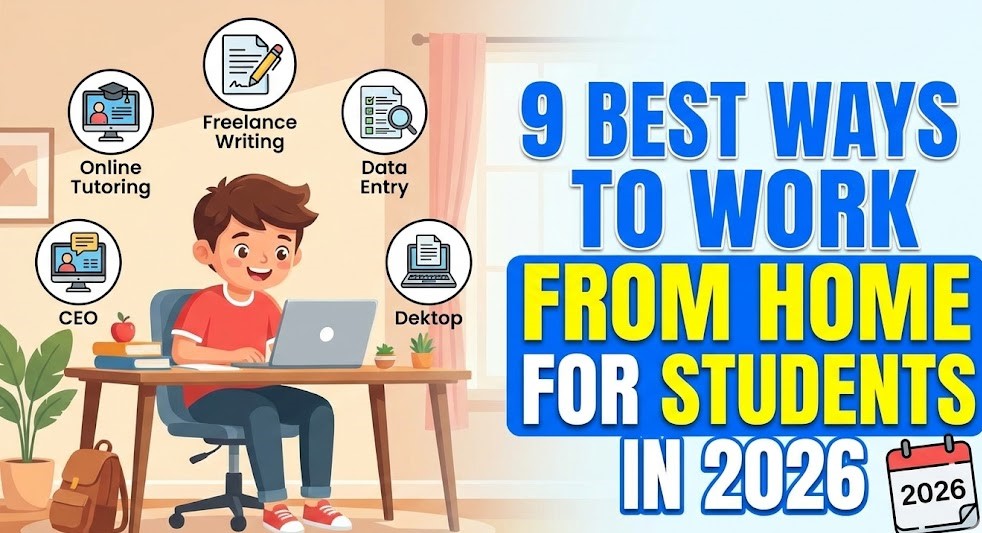
Studying or working from home has become the norm for many university students. The idea of “commuting” to work or your lectures by simply rolling out of bed to your laptop sounds dreamy. However, staying on task without a boss or professor looking over your shoulder can be a lot harder than it looks.
If you are planning to juggle a remote job and your degree, you need a solid strategy. Here are the 9 best ways to stay motivated, productive, and balanced while working from home as a student.

1. Set a Strict Routine
It might be exciting to ditch the mega-strict hours of a normal job, but a lack of routine can quickly destroy your productivity.
Assign yourself fixed hours for starting the day, taking breaks, and logging off. If you don’t, you will find yourself working right through your lunch break or frantically typing at 2 AM because you procrastinated all afternoon.
Treat working at home exactly like showing up to an office. Get dressed. Don’t work in your pajamas. This simple act shifts your brain into “work mode” and prevents you from lounging in front of the TV. Squeezing in a morning walk or jog before you open your laptop can also do wonders for your focus.
2. Be Your Own Boss (And Find Your Motivation)
Having a job where you can work from the comfort of your bedroom requires serious self-discipline. There is no manager to yell at you for showing up late, and no one to tell you off for slacking halfway through the day.
When your housemates are playing a game of FIFA or the group chat is blowing up, you have to resist. If you lose focus, the quality and quantity of your work—and your paycheck—will take a hit. Try breaking tasks down into smaller, digestible goals so you can reward yourself for hitting milestones throughout the day.
3. Manage Your Social Media Time
Checking what your friends are doing on Instagram or endlessly scrolling through TikTok is almost second nature. However, social media is a massive distraction. Before you know it, a half-hour has disappeared.
Put your phone on silent and keep it face down out of reach, or better yet, use airplane mode. You don’t have to go completely cold turkey, but set a strict rule: only check it once every hour, and for no more than three minutes. You can also use website blocking tools like Freedom or Forest to keep yourself off distracting sites during work hours.
4. Don’t Spend Too Much Time Alone
Remote work is incredibly flexible, meaning you can easily meet a friend for coffee or invite them over for lunch. However, there is no denying that sitting alone and staring at a computer for eight hours a day can take a toll on your mental health and wellbeing.
Make time for self-care and human interaction. We strongly recommend getting out of the house to work from a local library or a quiet café at least a couple of times a week. The fresh air and change of scenery will do you good.
5. Cap Your Working Hours
Time flies when you are glued to a screen. Give yourself a set number of work hours per day and stick to it—especially if you are juggling a part-time job alongside a full-time degree.
Many university courses recommend a strict limit of 15 hours of paid work per week during term time so you can still concentrate on your studies. Start with a lower number of work hours, and only take on more projects if you are certain you can handle the workload without burning out. Balance is everything.
6. Eat Healthily
Managing your diet while working just steps away from the kitchen can be tough. Having packets of biscuits and crisps lying around will only encourage mindless grazing.
Be mindful of what you eat and stock up on brain-boosting foods. Eating proper, nutrient-dense breakfasts and lunches will keep the urge to snack at bay. Try meal planning on Sundays so you don’t have to cook from scratch after a long day of studying and working.
7. Become a Self-Starter
Most universities and remote companies offer support, but no one is going to hold your hand when it is 3 AM and you are stuck on a project.
When you run into a problem, try to solve it yourself before firing off an SOS email. Search for answers online, consult textbooks, or test different solutions. Getting organized and planning your workload using methods like the Pomodoro Technique will give you the buffer time you need to handle unexpected hurdles before your deadline.
8. Find the Right Work-From-Home Job
Finding a remote gig requires just as much effort as landing a traditional in-person role. Treat the job hunt seriously.
Start by browsing specialized platforms like WorkInStartups or broad job boards like CV-Library. Startups are particularly keen on hiring remote student workers.
Top WFH jobs for students include:
- Freelance writing or content creation
- Online tutoring
- Virtual Assistant (VA)
- Social Media Management
- Translating or transcribing
- Paid online surveys
9. Don’t Get Conned by Fake Job Adverts
The golden rule of finding remote work: if it looks too good to be true, it probably is. You can forget the dreams of an entry-level gig paying £70 an hour for simple data entry. Unfortunately, students and recent graduates are prime targets for employment scams. Always do your research. Check the company’s digital footprint and verify their location on Google Maps. If their “headquarters” looks like a kebab shop on Street View, it probably is a kebab shop. Legitimate jobs will always require a formal interview process and will never ask you to pay an upfront “training fee.”

Conclusion
Working from home as a university student is a fantastic way to earn extra money, build your resume, and gain independence without sacrificing your studies. However, as the digital gig economy continues to evolve in 2026, succeeding in a remote role demands self-discipline and excellent time management.
By setting strict boundaries, creating a dedicated workspace, managing digital distractions, and prioritizing your mental and physical health, you can master the art of remote work. Remember to be patient with yourself as you find the routine that works best for your unique class schedule. The opportunities are out there—you just need the focus and preparation to seize them.
Also Read : How to Become a Freelance Web Developer in 2026: A Detailed Guide
